The Over-the-Counter Medications in Your Bathroom Cabinet May Be Quietly Working Against Your Prescriptions
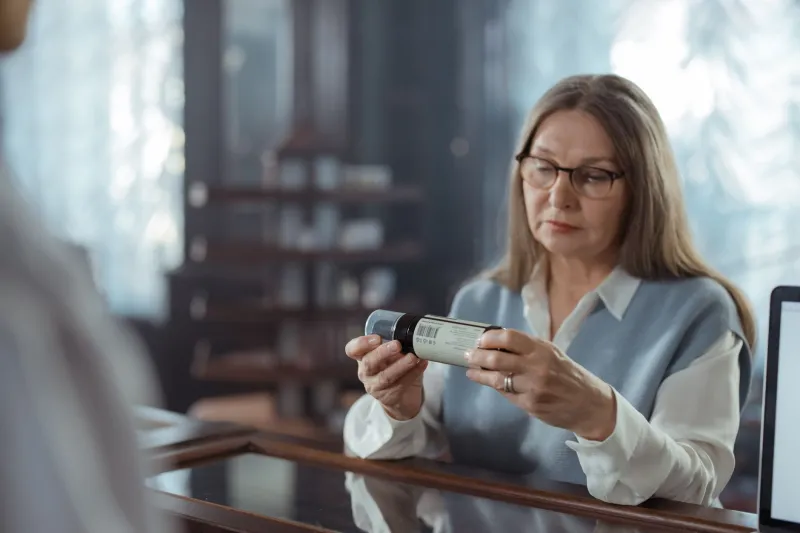
There is a widespread and dangerous assumption embedded in American healthcare culture: if a medication doesn't require a prescription, it must be safe to take alongside one that does. This assumption sends thousands of people to emergency rooms every year.
Over-the-counter (OTC) medications are not inert. They contain pharmacologically active compounds that interact with enzymes, receptors, and metabolic pathways in the body — the same pathways that prescription drugs depend on. When an OTC product and a prescription medication compete for or interfere with those pathways, the results can range from reduced drug effectiveness to life-threatening toxicity.
For older Americans managing multiple chronic conditions — a demographic that takes more prescription medications than any other — this risk is especially pronounced.
Why OTC Interactions Are So Frequently Overlooked
When a physician asks, "What medications are you currently taking?" most patients mentally scan their prescription bottles. The ibuprofen they take for back pain three times a week, the Tums they chew after dinner, the NyQuil they used last month during a cold — these rarely come to mind. And yet each of these products has the potential to meaningfully alter the behavior of a prescription drug.
The problem is compounded by the sheer accessibility of OTC products. They are sold in grocery stores, gas stations, and discount retailers without any clinical checkpoint. There is no pharmacist consultation required, no interaction screening, and no documentation that connects an OTC purchase to a patient's medical record.
A 2022 survey published in the Journal of the American Geriatrics Society found that a significant proportion of older adults taking prescription medications were simultaneously using OTC products that carried a clinically meaningful interaction risk — and that the majority had not informed their physician or pharmacist.
Pain Relievers: The Most Commonly Misused OTC Category
Nonsteroidal anti-inflammatory drugs (NSAIDs) — including ibuprofen (Advil, Motrin) and naproxen (Aleve) — are among the most widely used OTC medications in the United States. They are also among the most interaction-prone.
NSAIDs and blood thinners: Patients taking warfarin (Coumadin) or newer anticoagulants such as apixaban (Eliquis) or rivaroxaban (Xarelto) face a serious bleeding risk when they add an NSAID. NSAIDs inhibit platelet aggregation and can irritate the gastrointestinal lining, creating a dual mechanism for potentially severe internal bleeding. Even a short course of ibuprofen for a headache or muscle strain can elevate this risk significantly.
NSAIDs and antihypertensives: Regular NSAID use can blunt the effectiveness of blood pressure medications, including ACE inhibitors, ARBs, and diuretics. The mechanism involves NSAID-induced sodium retention and vasoconstriction, which counteract the drugs' intended effects. For patients whose blood pressure is carefully controlled, this interaction can destabilize a regimen that took months to optimize.
NSAIDs and lithium: For patients with bipolar disorder taking lithium, NSAID use can cause lithium levels in the blood to rise to toxic concentrations. Lithium has a narrow therapeutic index — meaning the difference between an effective dose and a dangerous one is small — making this interaction potentially serious.
Acetaminophen (Tylenol), while generally safer than NSAIDs for patients on blood thinners, carries its own interaction concerns. At higher doses or with regular use, it can potentiate the effects of warfarin, increasing bleeding risk. Patients who consume alcohol regularly face an elevated risk of acetaminophen-induced liver damage, particularly if they are also taking medications metabolized by the liver.
Cold and Flu Remedies: A Complex Mixture of Active Ingredients
Multi-symptom cold and flu products are among the most pharmacologically complex OTC medications available. A single tablet or liquid dose may contain an antihistamine, a decongestant, a cough suppressant, a pain reliever, and sometimes an expectorant — each of which carries its own interaction profile.
Decongestants and cardiovascular medications: Pseudoephedrine and phenylephrine, the active decongestants in products like Sudafed, raise blood pressure and heart rate. For patients taking beta-blockers, MAO inhibitors, or medications for cardiac arrhythmias, this effect can be dangerous. Patients with hypertension are generally advised to avoid these products entirely.
Antihistamines and CNS depressants: First-generation antihistamines such as diphenhydramine (found in Benadryl and most "PM" formulations of common pain relievers) are central nervous system depressants. Combining them with benzodiazepines, opioid pain medications, muscle relaxants, or prescription sleep aids can produce additive sedation — a combination that has contributed to accidental overdose deaths.
Dextromethorphan (DXM) and antidepressants: The cough suppressant DXM, found in dozens of OTC cold products, interacts with selective serotonin reuptake inhibitors (SSRIs) and monoamine oxidase inhibitors (MAOIs) to increase the risk of serotonin syndrome — a potentially life-threatening condition characterized by agitation, elevated heart rate, high body temperature, and in severe cases, seizures.
Antacids and Heartburn Medications: The Absorption Disruptors
Antacids and acid reducers are taken casually by millions of Americans, often multiple times per day. Their interaction with prescription drugs is frequently underestimated.
Antacids and antibiotics: Antacids containing aluminum, magnesium, or calcium can bind to certain antibiotics — particularly fluoroquinolones like ciprofloxacin and tetracyclines — in the gastrointestinal tract, dramatically reducing the amount of antibiotic absorbed into the bloodstream. This can render an antibiotic course ineffective at the very moment it is most needed.
Proton pump inhibitors (PPIs) and clopidogrel: Omeprazole (Prilosec), available OTC, is one of the most commonly used drugs in America. Research has demonstrated that it can inhibit the enzyme responsible for converting clopidogrel (Plavix) — a blood thinner prescribed to patients with cardiovascular disease — into its active form, potentially reducing its effectiveness and increasing the risk of heart attack or stroke.
Antacids and thyroid medications: As noted in the context of food interactions, calcium-containing antacids taken near the time of levothyroxine administration can significantly impair thyroid medication absorption. Patients with hypothyroidism who rely on consistent thyroid hormone levels should take note.
Supplements Are Not Exempt
Herbal supplements and vitamins occupy an ambiguous space in American healthcare — neither fully recognized as medications nor treated as pharmacologically inert. They are not. St. John's Wort, one of the most widely used herbal supplements in the country, is a potent inducer of the CYP3A4 enzyme system, which metabolizes a broad range of prescription drugs including certain antidepressants, antiretrovirals, oral contraceptives, and immunosuppressants. Regular use can dramatically reduce the blood levels of these medications, rendering them clinically ineffective.
Fish oil, garlic supplements, and vitamin E all have anticoagulant properties that can compound the effects of blood-thinning medications. High-dose vitamin C can interfere with certain cancer chemotherapy agents. The list is far longer than most patients — and many physicians — appreciate.
What to Do: A Practical Framework
The solution is straightforward, even if the problem is complex:
- Maintain a complete medication list that includes every prescription drug, OTC product, vitamin, and supplement you take — including frequency and dose.
- Share this list with every provider you see at every appointment, not just your primary care physician.
- Ask your pharmacist to screen for OTC interactions before starting any new OTC product. This takes minutes and is free.
- Read the Drug Interactions section of the medication guide for each of your prescription drugs. The FDA requires this information to be available, and it is often more specific than the label on your prescription bottle.
- When in doubt, call before you take. A two-minute phone call to your pharmacy can prevent a serious adverse event.
The medicine cabinet is not a passive storage space. It is an active part of your healthcare environment — and every product in it deserves the same scrutiny as the prescriptions your physician wrote.