Why the Pill You Snap in Half May Not Be the Dose Your Doctor Prescribed
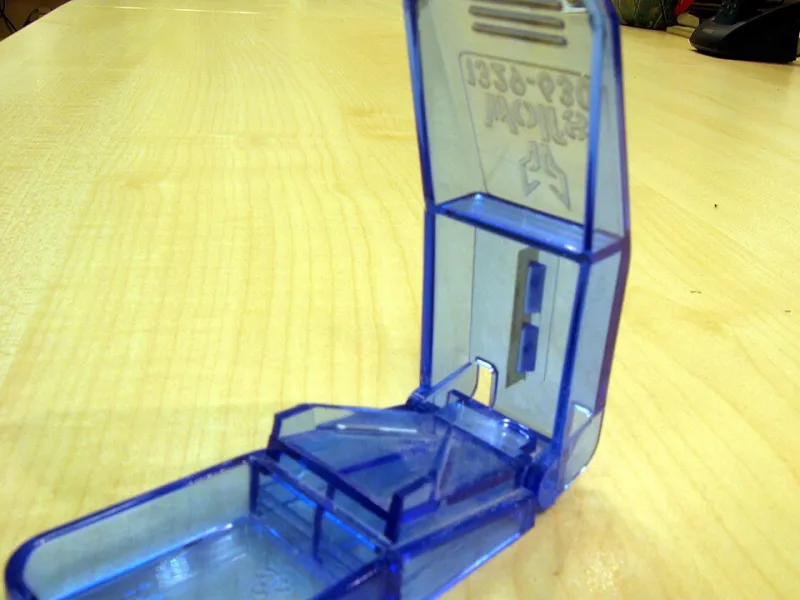
Photo: Steven Fruitsmaak, CC BY-SA 3.0, via Wikimedia Commons
A tablet is not simply a compressed pile of drug. It is a delivery system engineered to release a specific amount of medication into a specific part of your body at a specific rate. Break that system, and you may still be swallowing the same milligram count — but you are no longer taking the same medicine.
Below is a practical guide to the formulations that should be left intact, the ones that are genuinely safe to divide, and what to do when swallowing a tablet has become difficult.
Why the delivery system matters more than the drug
A standard immediate-release tablet is designed to dissolve quickly in the stomach. An extended-release product is not. It might be built around a slowly eroding matrix, an osmotic pump that pushes drug out through a laser-drilled hole, a capsule filled with beads coated at different thicknesses, or a multilayer tablet that releases in stages.
Each of those designs depends on the outer structure staying intact. Crush an osmotic pump tablet and you have released the entire dose at once. Open a capsule of coated beads and chew them, and you have defeated the coating that was supposed to protect your stomach or delay absorption.
The do-not-alter list
Extended-release and long-acting tablets
Anything labeled ER, XR, XL, SR, CR, LA, or XL should be treated as untouchable unless the manufacturer's labeling explicitly permits otherwise. Common examples include extended-release nifedipine, diltiazem, verapamil, metformin ER, bupropion XL, divalproex ER, and long-acting stimulant products. Breaking these can produce a rapid spike in blood levels followed by an early crash — the opposite of the steady concentration the prescription was written to achieve.
Enteric-coated products
The coating exists for a reason: to survive stomach acid and dissolve later. Enteric-coated aspirin, certain proton pump inhibitors, mesalamine formulations, and delayed-release duloxetine all depend on it. Crushing them can destroy the drug itself, irritate the stomach lining, or release a dose in the wrong part of the digestive tract.
Capsules containing coated beads
Some capsules may be opened and the contents sprinkled onto a spoonful of applesauce — but only when the labeling says so, and only without chewing the beads. Many others must never be opened at all. The difference is not visible to the eye, which is why the package insert, not intuition, settles the question.
Narrow therapeutic index drugs
For medications where small changes in blood level produce large changes in effect or risk, splitting is especially unforgiving. Warfarin, levothyroxine, digoxin, lithium, phenytoin, carbamazepine, and transplant immunosuppressants fall into this group. A split that yields 55 percent of the dose in one half and 45 percent in the other is a rounding error for most drugs and a clinically meaningful event for these.
Sublingual and buccal tablets
Nitroglycerin under the tongue and buprenorphine films or tablets placed against the cheek are formulated for absorption through mucous membranes. Chewing, swallowing, or splitting them defeats the route and can change both onset and total exposure.
What splitting actually does to the dose
Studies of tablet splitting consistently find the same thing: halves are rarely equal. Depending on the drug, the tool, and the technique, the two pieces can differ from each other by ten to twenty percent or more, and the total recovered from the tablet often falls short of the label because of lost fragments and powder.
A score line helps, but it is not a guarantee. Scoring is a manufacturing convenience, not a regulatory promise of dose uniformity. A kitchen knife is the worst option; a dedicated pill splitter is better, and splitting one tablet at a time — rather than lining up five and hoping for consistency — is better still.
When splitting is legitimate
Some tablets are made to be divided, and splitting can genuinely reduce cost or fine-tune a dose. Reasonable candidates include scored immediate-release tablets, several statins, immediate-release metformin, and certain drugs where a prescriber has deliberately prescribed a half-dose. Even then, a few rules apply: use a splitter, split only what you need for the next few days, store the halves in a labeled container away from moisture, and never split a capsule.
If your prescriber has told you to take half a tablet of a product that is not scored, ask the pharmacist to confirm the instruction before you start.
If swallowing pills is the problem
Difficulty swallowing tablets is common, particularly among older adults and anyone with a neurological or esophageal condition — and it is a problem worth solving properly rather than by improvising.
Ask specifically about alternatives: a liquid formulation, an orally disintegrating tablet, a smaller strength taken more often, a transdermal patch, or an injectable version. Some tablets can be dispersed in water; many cannot. Taking a tablet with a spoonful of pudding or applesauce, or using a pill-swallowing cup, helps some patients without altering the drug.
For anyone using a feeding tube, the question is more serious. Never crush a medication into a tube without pharmacist confirmation, and ask whether a liquid formulation exists — some liquid versions carry their own risks, including different absorption or sugar alcohol content.
The takeaway
Before you break, crush, or chew anything, read the label and ask one question of your pharmacist: can this tablet be altered? It takes a minute. The answer may be yes, no, or a suggestion for a formulation that solves the problem entirely.