Why the Same Medication Works Differently for Every Person — And What That Means for Your Treatment
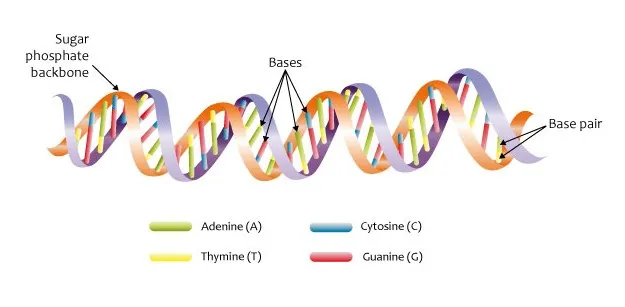
Photo: Genomics Education Programme, CC BY 2.0, via Wikimedia Commons
Imagine two coworkers — same age, similar weight, identical diagnosis of generalized anxiety disorder. Their psychiatrist prescribes the same SSRI at the same dose. Six weeks later, one of them feels like a different person: calmer, more focused, sleeping through the night for the first time in years. The other has gained twelve pounds, feels emotionally blunted, and has developed persistent nausea. Both took the pill faithfully every morning.
This scenario plays out in doctors' offices across the United States every single day. And for decades, patients blamed themselves — their willpower, their attitude, their commitment to treatment — when the real explanation lay buried in their DNA.
Welcome to the world of pharmacogenomics: the science of how your genetic makeup determines the way your body processes, responds to, and tolerates medications.
Your Genes Are a Drug Processing Manual
Every medication you swallow must be metabolized — broken down, activated, distributed through your bloodstream, and eventually cleared from your system. The primary machinery for this process is a family of liver enzymes known as the cytochrome P450 (CYP450) system. These enzymes are encoded by genes, and those genes vary significantly from person to person.
Depending on your genetic variants, you might fall into one of several metabolizer categories:
- Poor metabolizers break down certain drugs very slowly. The medication accumulates in the bloodstream, leading to exaggerated effects and intensified side effects — even at standard doses.
- Ultrarapid metabolizers process drugs so quickly that standard doses are cleared before they can produce a therapeutic effect. These individuals may need substantially higher doses to achieve the same outcome.
- Intermediate metabolizers fall between these extremes, often responding unpredictably to standard dosing protocols.
- Normal (extensive) metabolizers process drugs at the rate pharmaceutical trials assume — which is why drug dosing guidelines are calibrated around this group, often leaving everyone else in a gray zone.
The clinical implications are enormous. A poor metabolizer taking codeine, for example, may convert very little of it to active morphine and experience inadequate pain relief. An ultrarapid metabolizer taking the same codeine may convert it so rapidly that dangerously high morphine levels accumulate in the blood — a scenario that has resulted in documented fatalities, particularly in children.
It Is Not Just Genetics: The Full Spectrum of Individual Variability
While pharmacogenomics captures much of the scientific excitement in personalized medicine, genetics are far from the only variable shaping your drug response. A complete picture of individual medication variability includes:
Age
The aging body processes drugs differently in nearly every dimension. Kidney and liver function decline with age, reducing the clearance of many medications. Body composition shifts — less muscle mass, more fat tissue — alter how drugs distribute through the body. The result is that a dose appropriate for a 40-year-old may be excessive, even toxic, for the same person at 75. This is one reason MedGuide USA consistently emphasizes that seniors should have their medication regimens reviewed regularly.
Body Weight and Composition
Many drugs are dosed on a "one size fits all" basis despite the fact that body weight profoundly affects drug distribution. Medications that dissolve readily in fat tissue (lipophilic drugs) accumulate differently in individuals with higher body fat percentages. Water-soluble drugs distribute based on lean body mass. Standard doses can under-treat or over-treat patients depending on their specific body composition.
Sex and Hormonal Status
Biological sex influences gastric emptying rates, body composition, enzyme activity levels, and renal clearance — all of which affect drug metabolism. Women, on average, have higher body fat percentages and different hormonal environments that can amplify certain drug effects. Notably, much of the foundational clinical trial data underpinning drug dosing was historically collected predominantly from male subjects, a gap the FDA has worked to address but has not yet fully closed.
Gut Microbiome
Emerging research suggests that the trillions of microorganisms residing in your digestive tract play a measurable role in how orally administered drugs are absorbed and metabolized. Two individuals with dramatically different gut microbiome compositions may absorb the same oral medication at different rates — a variable that no standard blood test currently captures.
Concurrent Medications
Drug-drug interactions represent another layer of individual variability. A patient taking multiple medications simultaneously may find that one drug inhibits the CYP450 enzyme responsible for clearing another, effectively turning a normal metabolizer into a poor one for that specific drug.
Real-World Consequences: When the Standard Dose Fails
Consider some illustrative examples of how this variability plays out clinically:
Antidepressants: Approximately 40 to 60 percent of patients do not respond adequately to their first antidepressant. Pharmacogenomic testing can identify variants in genes like CYP2D6 and CYP2C19 that predict whether a patient will metabolize a given SSRI effectively — potentially reducing the years-long trial-and-error process that leaves many patients frustrated and undertreated.
Warfarin (blood thinner): Genetic variants in the CYP2C9 and VKORC1 genes dramatically influence the appropriate warfarin dose. Patients with certain variants require doses up to ten times lower than others to achieve the same anticoagulation effect. Getting this wrong carries serious bleeding risk.
Clopidogrel (Plavix): This widely prescribed antiplatelet drug is a prodrug — it must be converted to its active form by the CYP2C19 enzyme. Poor metabolizers of CYP2C19 convert very little clopidogrel to its active form, rendering the drug largely ineffective. For patients relying on clopidogrel after a heart stent, this inefficacy carries life-threatening implications.
What You Can Do: Smarter Conversations With Your Doctor
Ask about pharmacogenomic testing. Tests like GeneSight and similar panels are increasingly available and can provide your physician with actionable genetic data before prescribing psychiatric medications, pain medications, and cardiovascular drugs. Insurance coverage varies, but costs have fallen significantly.
Keep a complete medication history. Document every drug you have tried, what dose you received, how you responded, and any side effects. This longitudinal record is invaluable for identifying patterns that may reflect your metabolizer status.
Report unusual responses immediately. If a standard dose produces disproportionate effects — whether too strong or entirely ineffective — report this to your prescriber rather than simply stopping. This information can guide more appropriate prescribing.
Do not compare your treatment to others. Your neighbor's miracle medication may be metabolized entirely differently by your system. Individual drug response is not a referendum on your health or effort — it is biology.
The Future of Medicine Is Personal
The era of treating every patient identically is giving way to a more precise approach. Pharmacogenomics is not a distant promise — it is a clinical tool available today, albeit underutilized. As genetic testing becomes cheaper and more standardized, the expectation that every patient will respond to the same drug in the same way will eventually seem as outdated as one-size-fits-all surgery.
Until that future arrives fully, the most powerful thing you can do is understand that your unique biology matters — and advocate for treatment decisions that reflect it.