The Cheapest Specialist You'll See This Year Is Standing at the Pharmacy Counter
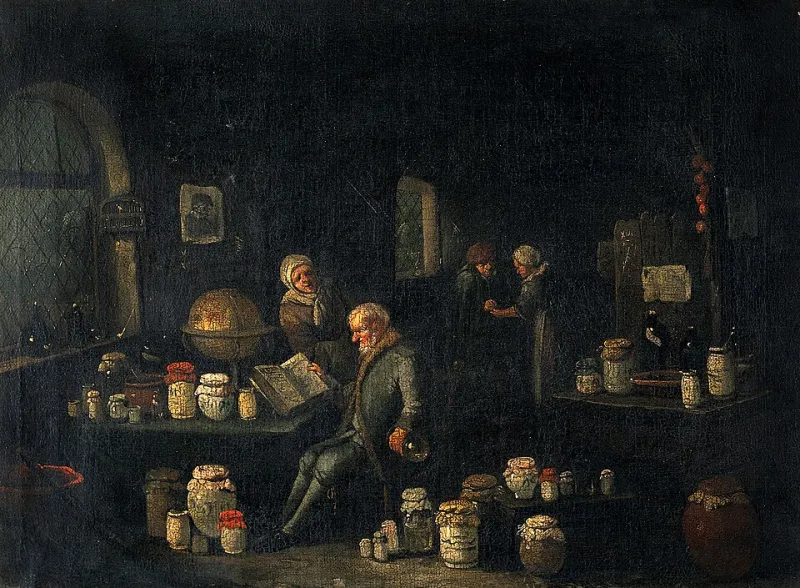
Photo: After Egbert van Heemskerck, Public domain, via Wikimedia Commons
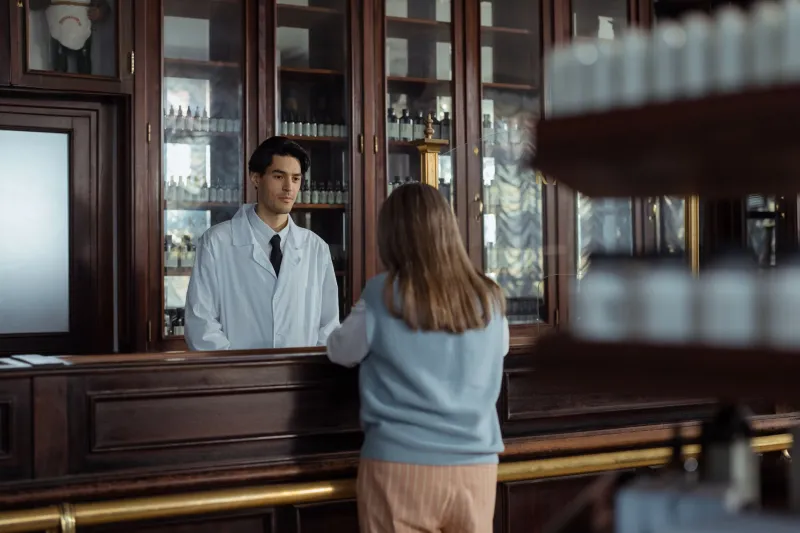
There is a moment at the pharmacy counter that happens thousands of times an hour across the United States. The technician rings up the prescription, staples the bag, and asks whether you have any questions for the pharmacist. Most people say no. They take the bag and go.
That brief offer is, by almost any measure, the least expensive clinical encounter available in American healthcare. It costs nothing, requires no appointment, and puts you in front of a licensed professional who has your full dispensing history on a screen. And it is routinely declined.
The offer most patients never really hear
Federal law has required pharmacists to offer counseling on new prescriptions since the Omnibus Budget Reconciliation Act of 1990, though the details vary by state. In practice, the offer often arrives at the worst possible moment — after a twenty-minute wait, with a line forming behind you and a drive-through window chiming in the background. Under those conditions, "no thanks" is not a decision. It is a reflex.
None of this is a criticism of pharmacists. It is a description of a system that has spent three decades making the offer technically compliant and practically forgettable.
What five minutes can catch
The value of the conversation is not that the pharmacist repeats what your prescriber said. It is that the pharmacist sees something your prescriber usually does not: everything you take.
A prescriber sees the medications they wrote. A pharmacist sees the whole dispensing record — the cardiologist's beta blocker, the urgent care antibiotic from March, the sleep aid you bought in another state, the supplement you mentioned once and never mentioned again. That is the vantage point where duplicate therapy, cumulative side effects, and quiet interactions surface.
Pharmacists describe a handful of scenarios that recur constantly. Two prescriptions from two prescribers containing the same active ingredient under different brand names. An over-the-counter anti-inflammatory that quietly undercuts a blood pressure regimen. A new medication that explains the dizziness a patient assumed was simply age. A dose that was never revisited after kidney function changed.
Why we decline
The reasons are predictable, and mostly structural.
Privacy is the largest. Many pharmacies counsel at a window with another customer six feet behind you. Discussing a prostate medication, an antidepressant, or an incontinence prescription in that setting is not something most adults will volunteer to do.
Time is second. A patient who has already spent a lunch hour waiting is rarely inclined to spend more of it.
Then there is the widespread assumption that the prescriber covered everything. Sometimes they did. More often, they covered what they prescribed — not what you are already taking from someone else.
And there is a status confusion. Many patients read the counter as retail rather than clinical, and treat the pharmacist as a cashier with a license rather than as the most accessible medication expert they will see all year.
How to get a real consultation
Ask for a scheduled one. Most chain and independent pharmacies can arrange a private consultation, frequently at an off-peak hour. Medicare Part D enrollees may also have access to a comprehensive medication review through their plan's medication therapy management program; that is a longer, separate conversation, and it is worth asking whether you qualify.
Bring everything. Every bottle, including over-the-counter products, supplements, eye drops, topicals, and anything you take only occasionally. A pharmacist cannot flag a duplicate or an interaction they cannot see.
Bring a written list. Include the drug name, the strength, how you actually take it (not how the label says to), and who prescribed it.
Choose the quiet window. Mid-morning on a weekday is usually worse than mid-afternoon, and the first three days of the month are the busiest days in most pharmacies.
A short script worth borrowing
You do not need sophisticated questions. These will do:
- What is this medication supposed to do, and how will I know it is working?
- When should I take it, and does food change anything?
- What should I do if I miss a dose?
- Which side effects are ordinary, and which mean I should call someone?
- Is there anything in my other prescriptions, supplements, or regular drinks that conflicts with this?
- Is there a generic, a different strength, or a different formulation that costs less and works the same?
- Can this be taken at the same time of day as the rest of my regimen?
- Does storage matter — heat, humidity, the bathroom cabinet?
Eight questions, five minutes, no copay.
The cost conversation nobody has
The most underused question at the counter may be the one about money. Pharmacists cannot rewrite your insurance policy, but they can tell you whether a ninety-day supply lowers the per-unit cost, whether a therapeutic alternative sits on a better formulary tier, whether a manufacturer copay card applies, or whether the cash price is actually lower than your copay — a situation more common than most patients realize.
Patients who never ask assume the price is the price. Usually it is not.
The bottom line
You will see your prescriber for fifteen minutes, several weeks from now, if you can get an appointment at all. You can see your pharmacist today, at no charge, with your entire medication history already in front of them.
Declining that conversation is not a time-saver. It is a decision to manage your own medications with less information than is readily available. The five minutes are worth taking.